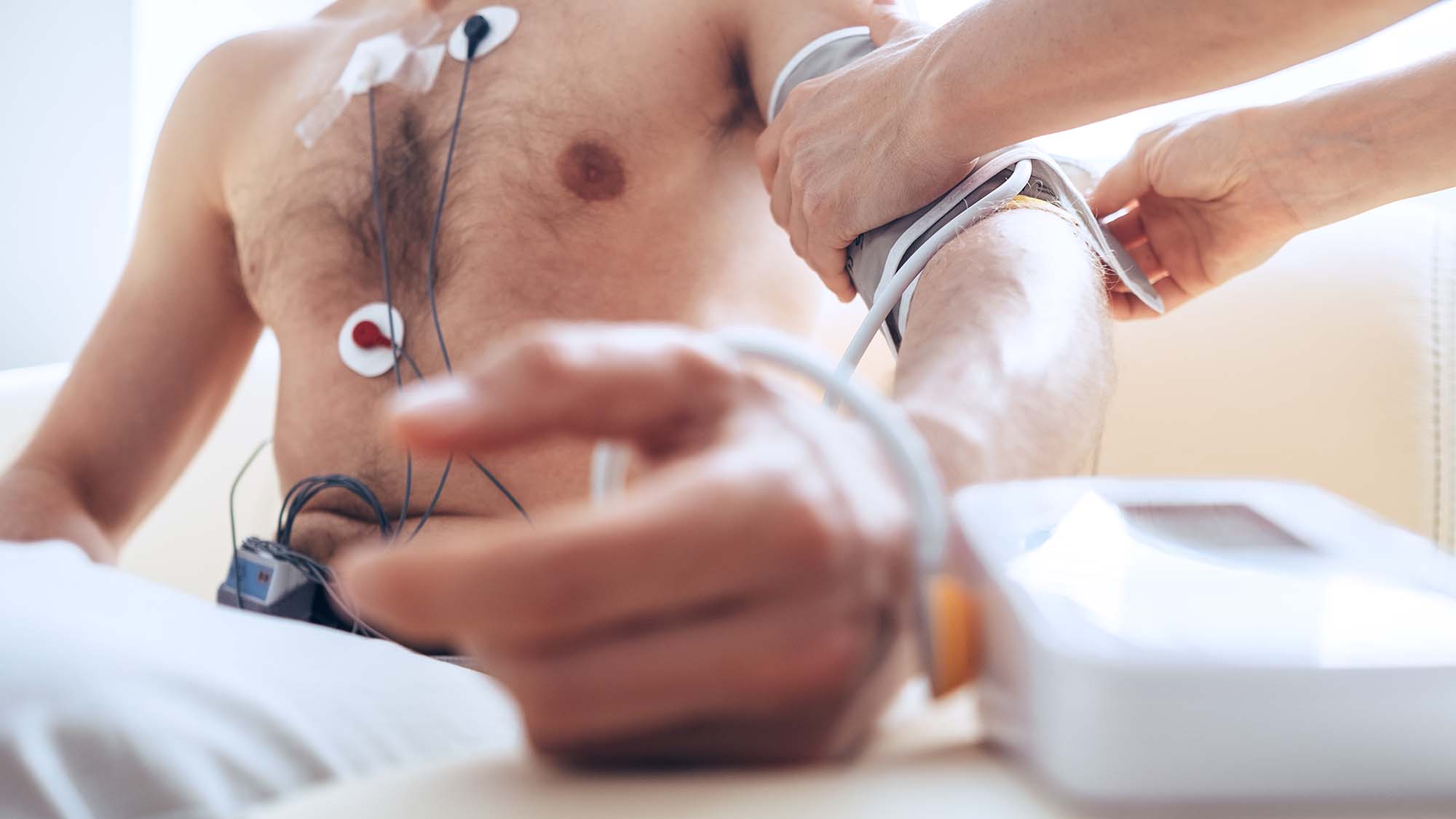
Holter monitor heart testing is available at both our Moruya and Broulee clinics. We use up-to-date, comfortable devices that allow you to access expert cardiac care locally, without unnecessary delays or travel.
A Holter monitor is a small, wearable device that records your heart’s rhythm for 1 to 2 days—helping us detect irregular heartbeats (arrhythmias) and giving your doctor a clearer picture of your heart health. A Holter monitor test may be done if a traditional electrocardiogram (ECG) doesn't provide enough details about the heart's condition.
Traditional Holter testing is inconvenient for patients, and it can take GPs weeks to receive reports.
The friction and delays can have serious consequences for patients with cardiac rhythm abnormalities.
Holter monitoring is now conveniently available right here in Moruya. Patients are set up for monitoring at our local practice as soon as possible, using the most modern, smallest, lightest, and most comfortable Holter device available. Enjoy the comfort and reassurance of expert care, close to home.
A Holter monitor is a small, wearable device that records your heart’s rhythm for 1 to 2 days—helping us detect irregular heartbeats (arrhythmias) and giving your doctor a clearer picture of your heart health. A Holter monitor test may be done if a traditional electrocardiogram (ECG) doesn't provide enough details about the heart's condition.
Traditional Holter testing is inconvenient for patients, and it can take GPs weeks to receive reports.
The friction and delays can have serious consequences for patients with cardiac rhythm abnormalities.
Holter monitoring is now conveniently available right here in Moruya. Patients are set up for monitoring at our local practice as soon as possible, using the most modern, smallest, lightest, and most comfortable Holter device available. Enjoy the comfort and reassurance of expert care, close to home.
Why it's done
You may need to use a Holter monitor if you have:
- Symptoms of an irregular heartbeat, also called arrhythmia.
- Fainting with no known cause.
- A heart condition that increases the risk of irregular heartbeats.
Before you get a Holter monitor, you'll have an electrocardiogram (ECG). An ECG is a quick and painless test. It uses sensors, called electrodes, taped to the chest to check the heart's rhythm.
A Holter monitor may be able to find irregular heartbeats that an ECG missed.
A Holter monitor may be able to find irregular heartbeats that an ECG missed.
Are there any risks
There are no significant risks involved in wearing a Holter monitor. Some people have minor discomfort or skin irritation where the sensors were placed.
Holter monitors aren't usually affected by other electrical appliances. But some devices may interrupt the signal from the electrodes to the Holter monitor. If you have a Holter monitor, avoid the following:
Holter monitors aren't usually affected by other electrical appliances. But some devices may interrupt the signal from the electrodes to the Holter monitor. If you have a Holter monitor, avoid the following:
- Electric blankets.
- Electric razors and toothbrushes.
- Magnets.
- Metal detectors.
- Microwave ovens.
Also, keep mobile phones at least 15 centimetres from the Holter monitor for the same reason.
How you prepare
You are set up with a Holter monitor during a scheduled appointment at our Moruya clinic. Unless you're told differently, plan to bathe before this appointment. Most monitors can't be removed and must be kept dry once monitoring begins.
Sticky patches with sensors, called electrodes, are placed on your chest. These sensors detect the heartbeat. They're about the size of a silver dollar. If you have hair on your chest, some of it may be shaved to make sure the electrodes stick.
Wires attached to the electrodes connect to the Holter monitor recording device. The device is about the size of a deck of cards.
Once your Holter monitor is fitted and you've received instructions on how to wear it, you can return to everyday activities.
Sticky patches with sensors, called electrodes, are placed on your chest. These sensors detect the heartbeat. They're about the size of a silver dollar. If you have hair on your chest, some of it may be shaved to make sure the electrodes stick.
Wires attached to the electrodes connect to the Holter monitor recording device. The device is about the size of a deck of cards.
Once your Holter monitor is fitted and you've received instructions on how to wear it, you can return to everyday activities.
What you can expect
During
A Holter monitor is typically worn for 1 to 2 days. During that time, the device records all of the heartbeats.
Holter monitoring is painless. The electrodes and wires can be hidden under clothing. The device is worn on a belt or attached to a strap.
Don't take the Holter monitor off. It must be worn during the entire recording period, even while sleeping.
Water can damage a Holter monitor. Don't swim, shower, or bathe while you're wearing a Holter monitor. If you have a wireless Holter monitor, you'll be shown how to disconnect and reconnect the sensors and the monitor so that you can shower or bathe.
While you wear a Holter monitor, you can do most other daily activities unless you have instructions to avoid certain things. You may be given a form to record your activities and any symptoms. It's particularly important to note if and when you have any of the following symptoms:
Holter monitoring is painless. The electrodes and wires can be hidden under clothing. The device is worn on a belt or attached to a strap.
Don't take the Holter monitor off. It must be worn during the entire recording period, even while sleeping.
Water can damage a Holter monitor. Don't swim, shower, or bathe while you're wearing a Holter monitor. If you have a wireless Holter monitor, you'll be shown how to disconnect and reconnect the sensors and the monitor so that you can shower or bathe.
While you wear a Holter monitor, you can do most other daily activities unless you have instructions to avoid certain things. You may be given a form to record your activities and any symptoms. It's particularly important to note if and when you have any of the following symptoms:
- Pounding, fluttering or skipped heartbeats.
- Shortness of breath.
- Chest pain.
- Lightheadedness.
- Microwave ovens.
Write down what activities you do and exactly what time you do them in your diary provided by nursing staff.
After
Once your monitoring period is over, you'll return the device. If you were asked to keep a record of symptoms that you had while wearing the device, the Holter monitor's data will be compared with your notes. This can help your care team make an accurate diagnosis.
How do you get the results?
Analysis is conducted and reported by a subspecialist cardiac electrophysiologist and is generally delivered electronically, usually within 24 hours of Holter recording upload.
Your healthcare professional will review the Holter monitor test results and discuss them with you. Information from Holter monitor testing can show if you have a heart condition.
Your healthcare professional will review the Holter monitor test results and discuss them with you. Information from Holter monitor testing can show if you have a heart condition.